American Idol and the MK identity? Bear with me…
I don’t usually get emotionally caught up in American Idol’s contrived drama. But I do spend every Wednesday evening at the Youngs’ watching hopefuls become yesterday’s wannabes. So it came as a surprise to me, a couple of weeks ago, when a 15-year old young man by the name of Jacee Bardeaux had me fighting for composure.
 That he has vocal talent is obvious. That’s what got him all the way
to “Group Week” in California, when contestants had to form small
ensembles and put together a performance piece that would wow the
judges. There was no formal directive for how the groups should be
formed, so some, like Jacee, ended up without partnerships. Just to
look at him, you can see that he is not exactly the usual American Idol
fare. He’s younger than most, a little overweight, visibly insecure and
so innocently hopeful… America watched as groups formed and began to
practice. Jacee watched too. Alone, he went from cluster to cluster,
shyly asking if they’d let him join, and being rejected time after
time. One group did reluctantly include him, but the leader, whose
ambitions annihilated any semblance of kindness, kicked Jacee back out
into the hostile space between islands of “belonging.” When he was
finally included in a foursome of singers, his confidence and hope had
been shattered. Watch until the 55-second marker of the video below to
witness the toll of Jacee’s ordeal on his fragile emotions.
That he has vocal talent is obvious. That’s what got him all the way
to “Group Week” in California, when contestants had to form small
ensembles and put together a performance piece that would wow the
judges. There was no formal directive for how the groups should be
formed, so some, like Jacee, ended up without partnerships. Just to
look at him, you can see that he is not exactly the usual American Idol
fare. He’s younger than most, a little overweight, visibly insecure and
so innocently hopeful… America watched as groups formed and began to
practice. Jacee watched too. Alone, he went from cluster to cluster,
shyly asking if they’d let him join, and being rejected time after
time. One group did reluctantly include him, but the leader, whose
ambitions annihilated any semblance of kindness, kicked Jacee back out
into the hostile space between islands of “belonging.” When he was
finally included in a foursome of singers, his confidence and hope had
been shattered. Watch until the 55-second marker of the video below to
witness the toll of Jacee’s ordeal on his fragile emotions.
In many respects, MKs are not much different from this 15-year old from New Orleans. We hover between clusters of those who know their place and fit their social contexts, hoping that someone will want us or include us despite our difference. We try to be tough and endure it. We try to act like it doesn’t really matter. But when that acceptance, however temporary, is finally extended to us, we’re often reduced to multi-cultural Jacees.
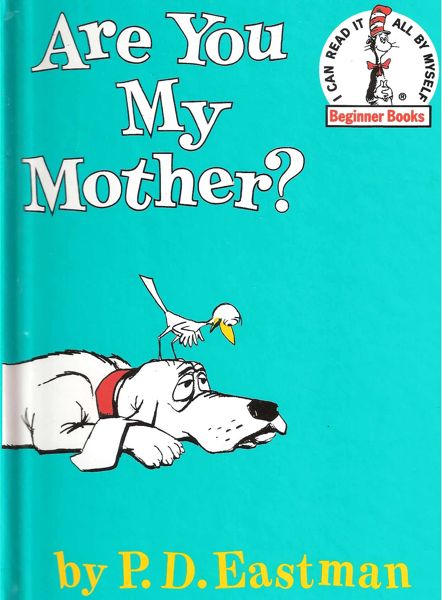
 When I was little, I’d snuggle up to my mom in the evenings and
listen to her reading “Are You My Mother?” to me, attracted to the
melancholy plight of the children’s book character in a way I’d never
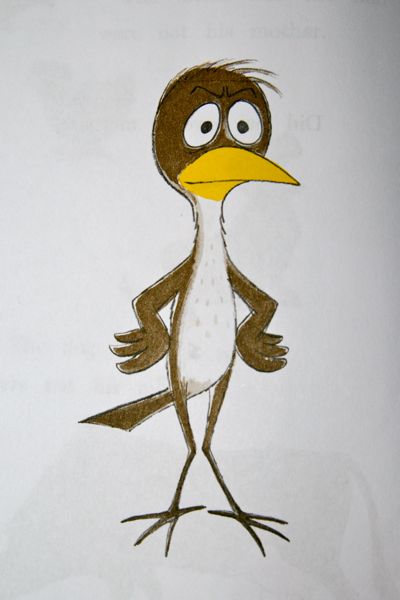
been to Snow White or Babar. In the story, the baby bird, a rather
pathetic figure with giant, hopeful eyes, wanders from cat to tractor to
cow and car, repeating his increasingly urgent question: “Are you my
mother?” I felt the pain that brought cartoon tears to his cartoon eyes
and felt the tremors of defeat in his feathered chest. The sensation of
lostness was all too familiar to me, even at that age.
When I was little, I’d snuggle up to my mom in the evenings and
listen to her reading “Are You My Mother?” to me, attracted to the
melancholy plight of the children’s book character in a way I’d never
been to Snow White or Babar. In the story, the baby bird, a rather
pathetic figure with giant, hopeful eyes, wanders from cat to tractor to
cow and car, repeating his increasingly urgent question: “Are you my
mother?” I felt the pain that brought cartoon tears to his cartoon eyes
and felt the tremors of defeat in his feathered chest. The sensation of
lostness was all too familiar to me, even at that age.
 When I saw a copy of the book in a store a few weeks ago, my instant
reaction was a marrow-deep urge to reach through the glossy cover and
comfort the hapless hero. Even at the (advanced) age of 43, I saw a bit
of me in him–a lifetime spent wondering if new places and people groups
would be my “mother,” my place of belonging and sameness. I’m asking
that question a lot these days.
When I saw a copy of the book in a store a few weeks ago, my instant
reaction was a marrow-deep urge to reach through the glossy cover and
comfort the hapless hero. Even at the (advanced) age of 43, I saw a bit
of me in him–a lifetime spent wondering if new places and people groups
would be my “mother,” my place of belonging and sameness. I’m asking
that question a lot these days.
 “I will never belong” is a sentiment I’ve heard expressed with
various degrees of rancor and drama in my 20 years in MK education. Of
all the traits Third Culture Kids and MKs share, I think this one is
among the most common. It is born of multi-cultural, multi-national,
multi-experiential backgrounds that serve both to expand our worlds and
limit our full adaptation to any of them. One of my first conscious
thoughts about my TCK identity came at a young age, when I realized
while on furlough that I’d never be fully American, and that the French
would never consider me fully French, either. Weird in America. Weird
in France. Is it any wonder that places like Black Forest Academy
become such a haven of “sameness” to MKs? If you cram enough
“weirdness” into the same community, that weirdness will become the
norm…and there’s healing comfort in that. Unfortunately, that level of
identification can also set us up for a lifetime of discontent, because
it is a sense of wholeness we may never know again.
“I will never belong” is a sentiment I’ve heard expressed with
various degrees of rancor and drama in my 20 years in MK education. Of
all the traits Third Culture Kids and MKs share, I think this one is
among the most common. It is born of multi-cultural, multi-national,
multi-experiential backgrounds that serve both to expand our worlds and
limit our full adaptation to any of them. One of my first conscious
thoughts about my TCK identity came at a young age, when I realized
while on furlough that I’d never be fully American, and that the French
would never consider me fully French, either. Weird in America. Weird
in France. Is it any wonder that places like Black Forest Academy
become such a haven of “sameness” to MKs? If you cram enough
“weirdness” into the same community, that weirdness will become the
norm…and there’s healing comfort in that. Unfortunately, that level of
identification can also set us up for a lifetime of discontent, because
it is a sense of wholeness we may never know again.
 Multi-cultural dwellers face three distinct options in their quest
for belonging. The first is to conform. The second is to intentionally
unconform. The third is to straddle the cultural divide.
Multi-cultural dwellers face three distinct options in their quest
for belonging. The first is to conform. The second is to intentionally
unconform. The third is to straddle the cultural divide.
CONFORMING, in some ways, is the easy way out. MKs are fairly good at it, at least on a surface level. We’re observers by nature. Whether it be trying out a new fast-food restaurant or voting in American elections for the first time, I still live by the old motto: watch first, then act. I’ll relinquish my place in line as often as I need to, until I’ve figured out how “normal” Americans do it and can proceed as they do. That level of adaptation or conforming is harmless and practical. But an onlooker may not recognize it as an observe-and-act tactic. It can look like indecision or reluctance. It isn’t.
 A full, no-holds-barred, complete conformity is a more dangerous
version of the classic MK ability to adapt. In this case, we’ll either
consciously or subconsciously discard those parts of ourselves that link
us to other cultures and modes of life in order to be fully American,
fully European or fully Asian. We’ll pick the culture we like best–and
some MKs have 5 or 6 of them to choose from. Most of the time, the
winner will be selected for comfort level, exotic appeal or being
“forced” to live within it. You’ll see this in the French MK who moves
to the States and wears nothing but black as an outward sign of her
allegiance to France. You’ll see it in the high school boy who so
misses his culture of choice that the fake Croatian accent he created as
a connection-point has become permanent. You’ll see it in the Swiss MK
who refuses to return to the States and stops using English–thereby
losing contact with his North American family. You’ll see it in the
sarong-wearing coed on an Oklahoma campus and the USA-bashing American
speaking perfect German at a beer fest in Berlin.
A full, no-holds-barred, complete conformity is a more dangerous
version of the classic MK ability to adapt. In this case, we’ll either
consciously or subconsciously discard those parts of ourselves that link
us to other cultures and modes of life in order to be fully American,
fully European or fully Asian. We’ll pick the culture we like best–and
some MKs have 5 or 6 of them to choose from. Most of the time, the
winner will be selected for comfort level, exotic appeal or being
“forced” to live within it. You’ll see this in the French MK who moves
to the States and wears nothing but black as an outward sign of her
allegiance to France. You’ll see it in the high school boy who so
misses his culture of choice that the fake Croatian accent he created as
a connection-point has become permanent. You’ll see it in the Swiss MK
who refuses to return to the States and stops using English–thereby
losing contact with his North American family. You’ll see it in the
sarong-wearing coed on an Oklahoma campus and the USA-bashing American
speaking perfect German at a beer fest in Berlin.
 In order for me to have fully adapted to my French culture, I would
have had to restrict my appearance, my political views, my gender-role
opinions, my culinary tastes, my social behaviors, my approach to
finances, and my taste in media to what that culture expected of me.
Once I was finished erasing the old and embracing the new, there would
have been very little left of the richness of a multi-cultural
upbringing: the broadened understanding, worldview and
artistic/social/political pallet that is so unique and so prized.
Conformity would have cost me every good thing that can come from being
an MK, but it would also have earned me a sense of belonging and
sameness. For that sense, MKs are willing to sacrifice much.
In order for me to have fully adapted to my French culture, I would
have had to restrict my appearance, my political views, my gender-role
opinions, my culinary tastes, my social behaviors, my approach to
finances, and my taste in media to what that culture expected of me.
Once I was finished erasing the old and embracing the new, there would
have been very little left of the richness of a multi-cultural
upbringing: the broadened understanding, worldview and
artistic/social/political pallet that is so unique and so prized.
Conformity would have cost me every good thing that can come from being
an MK, but it would also have earned me a sense of belonging and
sameness. For that sense, MKs are willing to sacrifice much.
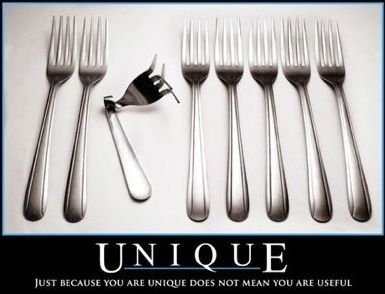
 UNCONFORMING is a fascinating phenomenon to me. It goes something
like this: “There’s no way I’m able to look or act like I’m supposed to.
I haven’t lived here long enough, I’m not willing to become
mono-cultural and I even if I tried, there’s a good chance I’d fail.
People on both continents tell me I’m weird–I’ll show them weird.” It’s
a self-defense mechanism that has serious back-firing potential. Our
multiple cultures do make us different, there’s no denying it. But
whereas being the VICTIM of that difference may be painful, being the
ARCHITECT of the difference gives us a sense of control. So we
exaggerate our weirdness in order to call it a choice, not an
affliction. I could give you a long list of student names from my years
at BFA, young people who knew that they wouldn’t fit in anywhere,
therefore decided to go all out. Sometimes it was strange clothes,
sometimes it was eccentric behavior, sometimes it was threatening
attitudes, weird tastes or social misconduct. On some, it was
endearing, on others it was off-putting. But these MKs whose identities
had been shattered and rearranged without their volition were finally
in control of how the world perceived them. And when someone’s
expression said “You’re weird,” they could pat themselves on the backs
and consider it mission accomplished, because they’d made it into a
choice, not an oddness imposed on them. But…they had made that illusive
“belonging” even more impossible to achieve.
UNCONFORMING is a fascinating phenomenon to me. It goes something
like this: “There’s no way I’m able to look or act like I’m supposed to.
I haven’t lived here long enough, I’m not willing to become
mono-cultural and I even if I tried, there’s a good chance I’d fail.
People on both continents tell me I’m weird–I’ll show them weird.” It’s
a self-defense mechanism that has serious back-firing potential. Our
multiple cultures do make us different, there’s no denying it. But
whereas being the VICTIM of that difference may be painful, being the
ARCHITECT of the difference gives us a sense of control. So we
exaggerate our weirdness in order to call it a choice, not an
affliction. I could give you a long list of student names from my years
at BFA, young people who knew that they wouldn’t fit in anywhere,
therefore decided to go all out. Sometimes it was strange clothes,
sometimes it was eccentric behavior, sometimes it was threatening
attitudes, weird tastes or social misconduct. On some, it was
endearing, on others it was off-putting. But these MKs whose identities
had been shattered and rearranged without their volition were finally
in control of how the world perceived them. And when someone’s
expression said “You’re weird,” they could pat themselves on the backs
and consider it mission accomplished, because they’d made it into a
choice, not an oddness imposed on them. But…they had made that illusive
“belonging” even more impossible to achieve.
 STRADDLING is probably the healthiest of the three “belonging”
options, though it is certainly not the easiest. It requires that we
settle for “mostly-belonging.” It also allows us to retain all those
facets that lend depth and breadth to our identities. In order to
successfully straddle cultures, we’ll have to understand each of them,
retaining those other-culture quirks that are acceptable in the place
where we are and disengaging those that might be jarring or
misunderstood by the “natives” around us. It isn’t a repudiation of
those aspects of our identities–it’s a temporary, selective display that
allows us to connect in the culture we live in without major
impediments. As relationships deepen and our friends know us better,
we’ll be able to broaden our expressions of multi-culturalism without
alienating them. An initial carefulness and adherence to social norms
will usually yield a more successful integration than, say, waving a
Greek flag and refusing to eat anything but olives and feta! (It’s the
same premise that says that missionaries shouldn’t enter the Amazonian
jungle with truck loads of Cheetos, wearing football gear and singing
Yankee Doodle at the top of their lungs! But we’re less careful with
overt cultural infringements when it comes to a culture that could be
our own.)
STRADDLING is probably the healthiest of the three “belonging”
options, though it is certainly not the easiest. It requires that we
settle for “mostly-belonging.” It also allows us to retain all those
facets that lend depth and breadth to our identities. In order to
successfully straddle cultures, we’ll have to understand each of them,
retaining those other-culture quirks that are acceptable in the place
where we are and disengaging those that might be jarring or
misunderstood by the “natives” around us. It isn’t a repudiation of
those aspects of our identities–it’s a temporary, selective display that
allows us to connect in the culture we live in without major
impediments. As relationships deepen and our friends know us better,
we’ll be able to broaden our expressions of multi-culturalism without
alienating them. An initial carefulness and adherence to social norms
will usually yield a more successful integration than, say, waving a
Greek flag and refusing to eat anything but olives and feta! (It’s the
same premise that says that missionaries shouldn’t enter the Amazonian
jungle with truck loads of Cheetos, wearing football gear and singing
Yankee Doodle at the top of their lungs! But we’re less careful with
overt cultural infringements when it comes to a culture that could be
our own.)
 This straddling will also require that we learn new ways of life, not
a rejection of what we’ve known before, but an expansion of our
cultural arsenal. This is also a means of honoring the culture in
which we’ve been planted. Moving to Germany and not alienating our
neighbors may require that we regularly sweep sidewalks that don’t need
sweeping and utter a general greeting/goodbye when we enter and leave
public places. Living in France may require that we allow friendships
to develop at a snail’s pace, that we sample the wine with which our
hosts have honored us, and that we not be loud and boisterous in public
arenas. Living in Turkey may require more modest dress for women.
Living in Russia may require a “bribe” column in our budgeting. You get
the drift. An MK who wants to belong will have to be okay with
altering some aspects of his/her identity in order to better fit in and
not offend new cultures…while retaining the good and valid aspects of
his/her other cultures, because that’s what makes us unique,
broad-minded, tolerant, chameleon-like and prized members of society.
This straddling will also require that we learn new ways of life, not
a rejection of what we’ve known before, but an expansion of our
cultural arsenal. This is also a means of honoring the culture in
which we’ve been planted. Moving to Germany and not alienating our
neighbors may require that we regularly sweep sidewalks that don’t need
sweeping and utter a general greeting/goodbye when we enter and leave
public places. Living in France may require that we allow friendships
to develop at a snail’s pace, that we sample the wine with which our
hosts have honored us, and that we not be loud and boisterous in public
arenas. Living in Turkey may require more modest dress for women.
Living in Russia may require a “bribe” column in our budgeting. You get
the drift. An MK who wants to belong will have to be okay with
altering some aspects of his/her identity in order to better fit in and
not offend new cultures…while retaining the good and valid aspects of
his/her other cultures, because that’s what makes us unique,
broad-minded, tolerant, chameleon-like and prized members of society.
 In a sense, this last option requires that we relinquish the baby
bird’s dream of full, uncompromising sameness. As MKs, I think we’re
healthier when we accept that we won’t ever be completely one or the
other of our natures, when we acknowledge and celebrate those ways in
which we CAN fit in, and when we set out to live enthusiastically in
that space between belongings. We can help our own assimilation process
simply by embracing it, while deliberately (if internally, at first)
retaining the complexity that makes us who we are. Once we accept a
culture-straddling existence, releasing our superiority, selectively
displaying our “otherness” and seeking points of sameness, we’ll be able
to belong without disowning our pasts, without losing ourselves or
alienating others.
In a sense, this last option requires that we relinquish the baby
bird’s dream of full, uncompromising sameness. As MKs, I think we’re
healthier when we accept that we won’t ever be completely one or the
other of our natures, when we acknowledge and celebrate those ways in
which we CAN fit in, and when we set out to live enthusiastically in
that space between belongings. We can help our own assimilation process
simply by embracing it, while deliberately (if internally, at first)
retaining the complexity that makes us who we are. Once we accept a
culture-straddling existence, releasing our superiority, selectively
displaying our “otherness” and seeking points of sameness, we’ll be able
to belong without disowning our pasts, without losing ourselves or
alienating others.
 We say that we will never belong. I think there are equal parts of
pride and resignation in that statement. I’d like to suggest that
complete belonging, with the losses it requires, is not necessarily what
we should be hoping for. Neither is a life spent in deliberate
difference. But that “mostly-belonging” that allows for uniqueness AND
relationship AND a fulfilling life in whatever partial culture we dwell
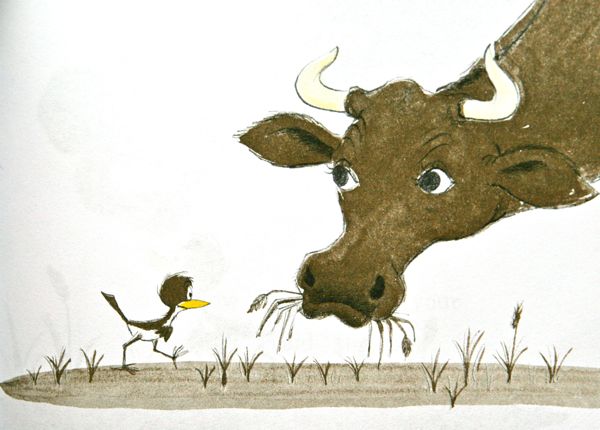
in is a gift only we can give ourselves. When we hop up to the cow and
find out she isn’t our mother (just like the car, the cat and the
tractor weren’t), we’d do well do say, “But we both see, we both smell,
we both eat and sleep and wander. Why don’t we walk a bit together?”
And the cow will slow its pace while the bird hops a bit faster.
They’ll develop ways to be themselves together. They’ll find a
mostly-belonging that lends companionship and purpose to the journey
they share. And in that, there is great joy and, yes, belonging.
We say that we will never belong. I think there are equal parts of
pride and resignation in that statement. I’d like to suggest that
complete belonging, with the losses it requires, is not necessarily what
we should be hoping for. Neither is a life spent in deliberate
difference. But that “mostly-belonging” that allows for uniqueness AND
relationship AND a fulfilling life in whatever partial culture we dwell
in is a gift only we can give ourselves. When we hop up to the cow and
find out she isn’t our mother (just like the car, the cat and the
tractor weren’t), we’d do well do say, “But we both see, we both smell,
we both eat and sleep and wander. Why don’t we walk a bit together?”
And the cow will slow its pace while the bird hops a bit faster.
They’ll develop ways to be themselves together. They’ll find a
mostly-belonging that lends companionship and purpose to the journey
they share. And in that, there is great joy and, yes, belonging.

I don’t usually get emotionally caught up in American Idol’s contrived drama. But I do spend every Wednesday evening at the Youngs’ watching hopefuls become yesterday’s wannabes. So it came as a surprise to me, a couple of weeks ago, when a 15-year old young man by the name of Jacee Bardeaux had me fighting for composure.

In many respects, MKs are not much different from this 15-year old from New Orleans. We hover between clusters of those who know their place and fit their social contexts, hoping that someone will want us or include us despite our difference. We try to be tough and endure it. We try to act like it doesn’t really matter. But when that acceptance, however temporary, is finally extended to us, we’re often reduced to multi-cultural Jacees.


CONFORMING, in some ways, is the easy way out. MKs are fairly good at it, at least on a surface level. We’re observers by nature. Whether it be trying out a new fast-food restaurant or voting in American elections for the first time, I still live by the old motto: watch first, then act. I’ll relinquish my place in line as often as I need to, until I’ve figured out how “normal” Americans do it and can proceed as they do. That level of adaptation or conforming is harmless and practical. But an onlooker may not recognize it as an observe-and-act tactic. It can look like indecision or reluctance. It isn’t.







No comments:
Post a Comment